


 Track Your Oder
 Shipping & Delivery
 Returns & Refunds
 Contact Us
Outdoor Guides
Camping in the Rain: Tips, Gear & Mistakes to Avoid
Jan
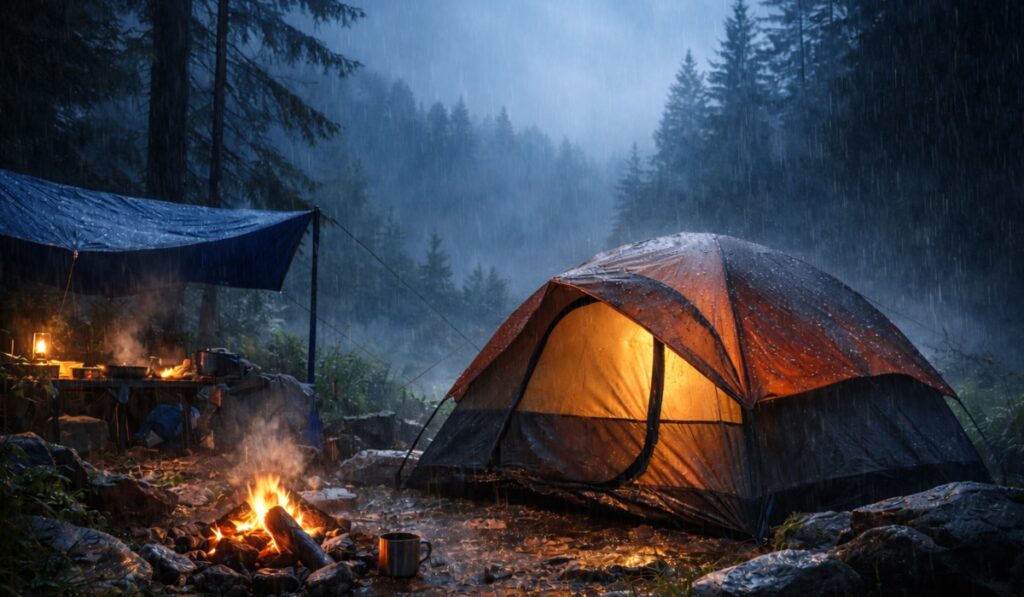
Camping in the rain sounds like a nightmare to many people—but with the right preparation, it can turn into one of the most memorable outdoor experiences. Fewer crowds, cooler temperatures, dramatic landscapes, and the calming sound of raindrops hitting your tent all create a unique atmosphere.
The real problem isn’t rain itself. It’s being unprepared.

In this complete guide, you’ll learn how to prepare for camping in the rain, what gear truly matters, how to set up camp in wet weather, and the most common mistakes campers make—so you can avoid them.
Why Camping in the Rain Isn’t as Bad as You Think
Most people cancel camping trips as soon as rain appears in the forecast. Experienced campers, however, know that rainy trips often come with unexpected rewards.
- Fewer people at campsites and trails
- Cooler temperatures, especially in summer
- More active wildlife
- Dramatic scenery and better photography
- A true test of outdoor skills
With the right mindset and preparation, rain becomes part of the adventure—not the enemy.
How to Prepare for Camping in the Rain
1. Check the Weather—But Don’t Panic
Always check the forecast before your trip, but don’t rely on a single app. Weather conditions can change quickly, especially in mountains or forests.
- Rain duration (light drizzle vs all-day rain)
- Wind speed and direction
- Nighttime temperatures
Light to moderate rain is usually manageable. Severe storms or flooding risks are signs to reschedule.
2. Choose the Right Campsite
Your campsite location matters more in rain than in dry weather.
- Avoid low ground, valleys, and dry riverbeds
- Look for slightly elevated terrain
- Check natural water drainage paths

Essential Gear for Camping in the Rain
1. A Proper Waterproof Tent
A tent labeled “waterproof” doesn’t help if it’s poorly designed or incorrectly set up.
- Full rainfly coverage
- Sealed seams
- Bathtub-style floor
Always use a groundsheet or footprint, and make sure the tent floor never touches the rainfly.
2. Dry Bags Are Non-Negotiable
Dry bags protect your most important gear—no matter how wet the conditions get.
- Clothing and sleeping gear
- Electronics and power banks
- Food and documents

3. Rain Clothing That Actually Works
Good rain gear keeps you dry without trapping sweat.
- Waterproof breathable jacket
- Waterproof pants
- Quick-dry base layers
- Extra socks
Avoid cotton—it absorbs water and dries slowly.
4. Footwear and Foot Protection
Wet feet ruin camping trips faster than almost anything else.
- Waterproof hiking boots
- Quick-dry trail shoes
- Camp sandals for resting
How to Set Up Camp in the Rain
Set Up Shelter First
Before unpacking anything, set up your tent and tarp. Only then should you open your backpack.
Use a Tarp Effectively
A tarp adds valuable dry space for cooking, organizing gear, and relaxing.

Create Wet and Dry Zones
Inside your tent, separate wet gear from dry gear. Never mix them.
Staying Dry and Comfortable
Ventilation Matters
Closing your tent completely traps condensation. Always allow airflow—even during rain.
Manage Sweat
Sweat is just as dangerous as rain. Adjust layers often and avoid overheating.

Common Camping in the Rain Mistakes
- Trusting waterproof labels blindly
- Packing everything in one compartment
- Not bringing extra clothes
- Poor campsite drainage
- Cooking inside the tent
Avoiding these mistakes alone can dramatically improve your rainy camping experience.
Is Camping in the Rain Worth It?
Absolutely—if you’re prepared.
Rain camping builds confidence, skills, and appreciation for good gear. Many experienced campers say their most memorable trips happened in bad weather.
Final Thoughts
Camping in the rain isn’t about staying perfectly dry—it’s about staying safe, warm, and comfortable. With the right mindset, proper gear, and smart techniques, rain becomes part of the adventure rather than something to fear.
Prepare well, respect the weather, and enjoy the journey.

 Waterproof Bags
 Water Storage & Hydration
 Waterproof Protection