


 Track Your Oder
 Shipping & Delivery
 Returns & Refunds
 Contact Us
Outdoor Guides
How to Choose the Right Sleeping Bag for Every Season
Jan
A sleeping bag is more than just a piece of camping gear — it’s your primary source of warmth and recovery after a long day outdoors. Choosing the wrong sleeping bag can lead to cold nights, poor sleep, and even dangerous situations in extreme weather.
With so many options on the market, from ultralight summer bags to heavy-duty winter sleeping systems, it’s easy to feel overwhelmed. The key is understanding how sleeping bags work and how different designs perform across seasons.
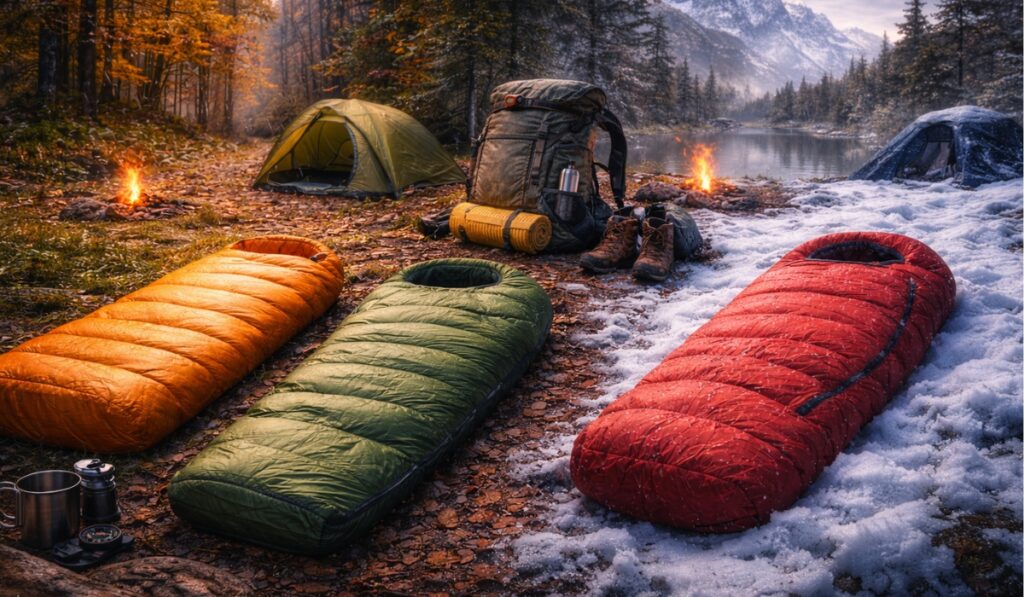
In this guide, you’ll learn exactly how to choose the right sleeping bag for spring, summer, fall, and winter, based on temperature ratings, insulation types, shapes, and real-world usage.
Why Choosing the Right Sleeping Bag Matters
Your sleeping bag directly affects your body temperature, energy recovery, and overall safety outdoors. Unlike clothing, you can’t simply “move around” to generate warmth once you’re inside your bag.
A poorly chosen bag can cause heat loss, condensation buildup, and restless sleep, even if the rest of your camping setup is solid.
Understanding Sleeping Bag Temperature Ratings
 Temperature ratings help you understand when a sleeping bag performs best.
Most modern sleeping bags use standardized temperature ratings, usually displayed as a comfort rating, limit rating, and extreme rating.
- Comfort rating: Ideal sleeping temperature for most users
- Limit rating: Lowest temperature a sleeper can endure
- Extreme rating: Survival-only, not for comfort
Always choose a sleeping bag based on the comfort rating, not the extreme number printed on the tag.
Sleeping Bag Insulation: Down vs Synthetic
 Down and synthetic insulation perform differently in wet and cold conditions.
Down Insulation
Down sleeping bags are lightweight, compressible, and extremely warm for their weight. They are ideal for dry, cold environments and backpacking trips where pack size matters.
Synthetic Insulation
Synthetic bags retain warmth even when wet and dry faster, making them a better choice for humid climates or rainy camping trips.
Choosing a Sleeping Bag by Season
 Different seasons demand different sleeping bag designs and ratings.
Summer Sleeping Bags
- Temperature rating: 10°C to 20°C
- Lightweight and breathable
- Often rectangular or quilt-style
3-Season Sleeping Bags
- Temperature rating: -5°C to 10°C
- Most versatile option
- Ideal for spring, summer, and fall
Winter Sleeping Bags
- Temperature rating: below -10°C
- Heavier insulation and draft collars
- Designed for snow and alpine use
Sleeping Bag Shape: Mummy vs Rectangular
 Sleeping bag shape affects warmth, comfort, and pack size.
Mummy bags trap heat more efficiently and are preferred for cold conditions, while rectangular bags offer more room and comfort for casual camping.
Fit, Size, and Comfort Considerations
A sleeping bag that’s too large will waste heat, while one that’s too small will feel restrictive and uncomfortable.
- Choose the correct length for your height
- Consider wider cuts if you move while sleeping
- Check hood and zipper quality
Final Tips for Choosing the Right Sleeping Bag
 Proper packing and storage extend the life of your sleeping bag.
- Always plan for colder-than-expected weather
- Use a sleeping pad to prevent heat loss
- Store sleeping bags uncompressed at home

 Waterproof Bags
 Water Storage & Hydration
 Waterproof Protection